
— 09.08.2026
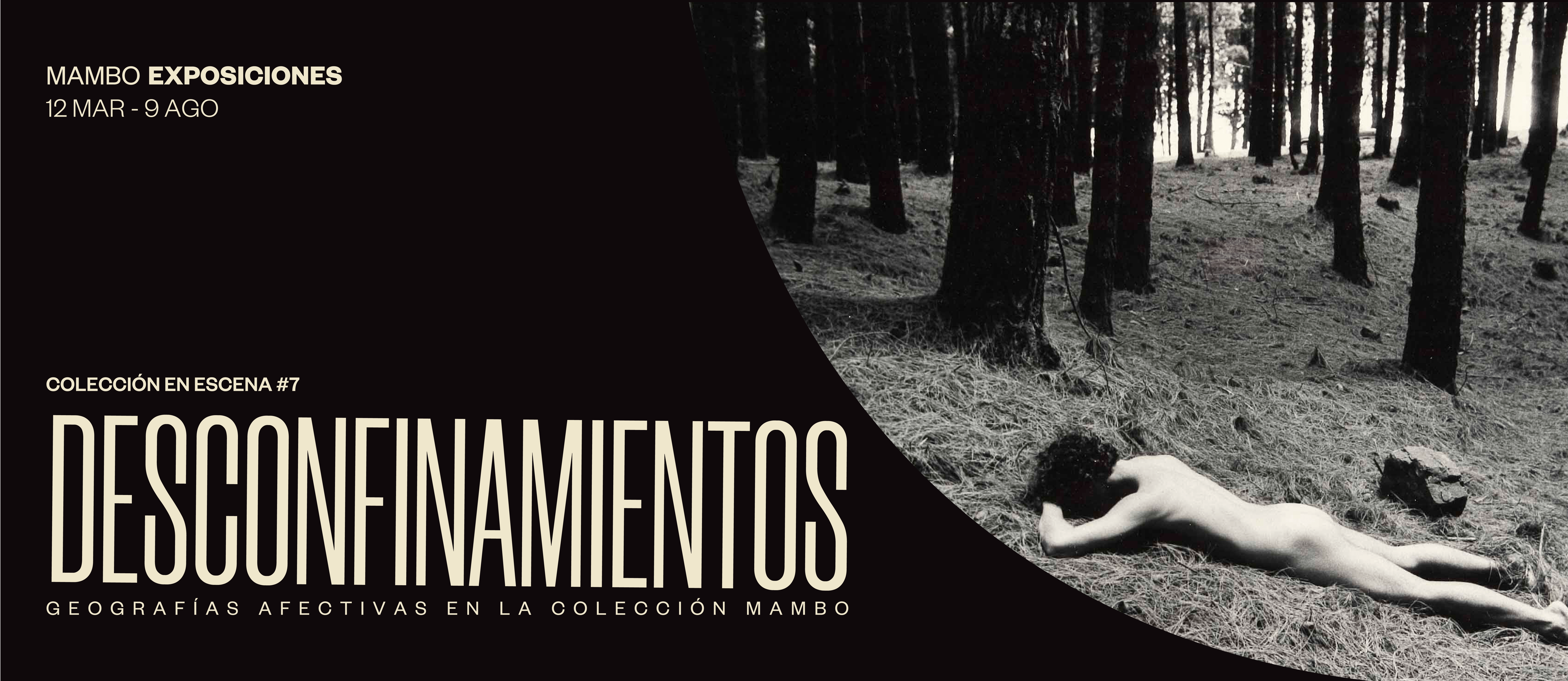
The Collection on Stage #7 Unbounding: Affective Geographies in the MAMBO Collection
For 2026’s first exhibition cycle, dedicated to the relationship between human beings and the natural world, Unbounding presents a selection of artworks from Bogotá Museum of Modern Art’s Collection. The show proposes a rereading of these artworks from the lens of Affective Geography, seeking to liberate them from traditional frameworks of interpretation.
The Collection, established in the sixties with a donation of approximately eighty foundational artworks, stewards pieces by well-known names as well as by artists who, having emerged during the decades of the sixties, seventies, and eighties, slowly disappeared from the country’s mainstream modern and contemporary art spaces. Some of the works on view only offer fleeting hints into the lives and trajectories of the artists that created them, complicating a historicist vision that would otherwise insert them into a continuum of movements and moments in the history of Colombian art. Rereading these works beyond such a paradigm allows us to encounter them not as instances of discontinuity, but rather as on par with the production of other artists whose trajectories have traced a more legible course.
Affective Geography, a concept that has emerged over the last two decades, understands human affect as an active force that reverberates throughout the physical world and conceives of the environment beyond its materiality: ideal and personal imaginaries, presences and states of being all participate in the construction of place. Affect, a force that circulates between bodies and simultaneously activates the mind, the body, reason, and emotion, is a conceptual tool as improbable and opaque as the most illegible corners of the Collection.
The paintings Bogotá (1984) by María Clara Gómez, and Untitled (1996) by María Fernanda Zuluaga approximate both object and landscape in visual terms. Here, depicting the view from a window entails more than a mere mimetic exercise, it constitutes a declaration: painting is understood as a sustained meditation across time and as a means for nurturing connections with the mountains, reflections, light, and everything that configures the environment. While Bodies (1968) by Amelia Cajigas dissolves the boundaries between bodily silhouette and mountainous relief, in Jenny Toros’s performance Docile Bodies (2022) the artist fuses her body with the earth, “configuring an ambiguous image that oscillates between altar and sepulchre”.
To think through affect is to consider what is small, ordinary, and makeshift as elements, that piece by piece, construct space as political. The paintings by Elisa Gramcko, Broken Surface (1963) and Teresa Casanova, Calabrofos (1961), traditionally associated with Venezuelan informalist abstraction, can be read alternatively as studies of the microscopic world. The Peruvian Worm (1977) by Liliana Villegas and Sun and Shadow (1992) by Margarita Gutiérrez are two works that shatter the dimensions of otherwise minute natural elements, appearing to underscore their importance as silent builders of the natural and constructed environment.
Representing the seventh iteration of the Collection on Stage, a program dedicated to researching, stewarding, and disseminating the Museum’s holdings, this exhibition proposes to see the Collection not as a static archive, but as an affective territory in a constant state of potential transformation.
Curated by:
Inés Arango Guingue